
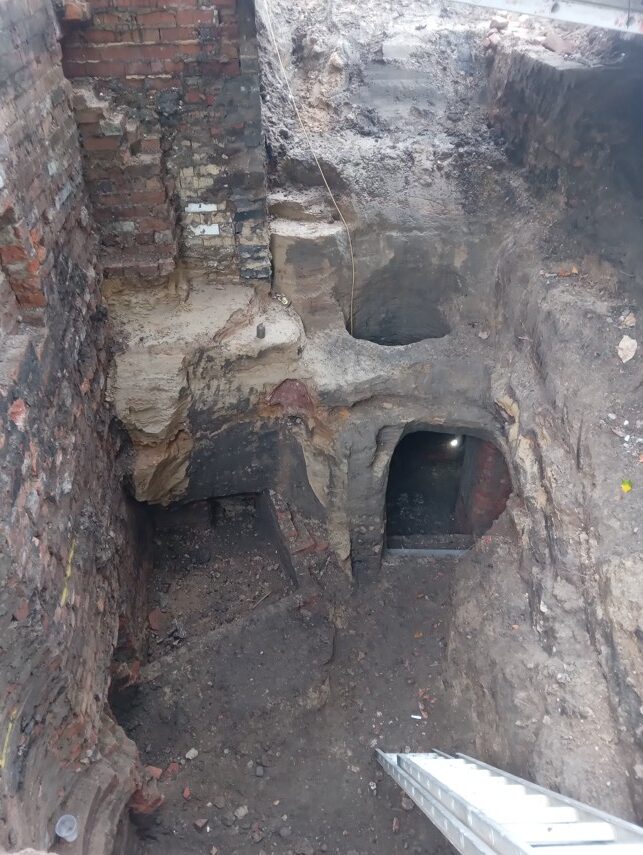
Nottingham’s underground world has reached a major new milestone, with the known number of caves beneath the city now officially reaching 1,000.
The announcement follows years of dedicated research by Nottingham City Council’s City Archaeologist, Scott Lomax, who has spent more than 15 years investigating, recording and protecting Nottingham’s unique underground heritage.
Beneath Nottingham’s streets lies a hidden underground world shaped by more than 1,000 years of history. This milestone reinforces Nottingham’s claim as the European City of Caves, with no other city in Europe known to have such a vast network of surviving man-made caves.
Scott’s research combines historic documents, old maps, archaeological investigations and discoveries made during redevelopment works across the city. Many caves previously thought to have been destroyed have instead been found to survive hidden beneath modern buildings and streets.
Nottingham City Council’s City Archaeologist, Scott Lomax, said: “Reaching 1,000 confirmed caves is a huge milestone for Nottingham and for understanding the city’s heritage.
“While Nottingham does not retain the same quantity of historic buildings as places such as York or Chester, we have something no city in Europe can rival – a thousand caves that reveal how ordinary people lived and worked over the last thousand years.
“Nottingham is the European City of Caves. These caves are one of the best-preserved parts of our historic environment and they tell the story of everyday life across centuries – from industry and commerce to storage, shelter and survival.
“This milestone is not the end of the story. I am confident there are still many more caves to be found, and the research continues to build a much greater understanding of how old they are, how they were first used, how their uses changed over time and how we can preserve them for future generations.”
The caves have served many purposes over the centuries, including homes, storage areas, workshops, tannaries, maltings and beer cellars. During the World Wars, many were also used as air raid shelters.
The discoveries also play an important role in the city’s planning process. Nottingham City Council has a dedicated caves policy within its planning framework to ensure caves are properly investigated and protected when redevelopment takes place.
Recent discoveries include:
- Brook Street – identified through documentary research and later uncovered during Severn Trent works. The cave is believed to date from around 1830 and served as the beer cellar for the Flying Horse beer house.
- Stoney Street / Lace Market – discovered during redevelopment works after earlier records suggested the cave had been destroyed. Investigations secured by Scott proved the cave still survived and it has now been preserved within the new development.
- Goose Gate – discovered during investigations requested by Scott, where a shaft and blocked entrance were uncovered. The cave is believed to be an early 19th-century beer cellar and has been protected within redevelopment works.
- Mansfield Road Sand Mine – recently identified during investigations, with early indications suggesting it dates back to the 18th century.
Councillor David Mellen, Executive Member for Leisure, Culture and Tourism, said: “Nottingham’s caves are one of the most unique and important parts of our heritage, helping tell the story of our city and the people who lived and worked here over hundreds of years.
“Reaching 1,000 recorded caves is an incredible achievement and a testament to the dedication and expertise of Archaeologist Scott Lomax and the wider heritage team. This work is helping protect Nottingham’s history for future generations while strengthening Nottingham’s reputation as one of the UK’s most unique heritage destinations.”
Historic assumptions that many Nottingham caves had been destroyed are increasingly being challenged, with investigations continuing to uncover caves previously believed to have been lost. In many cases, caves have survived hidden behind later walls, beneath modern developments or partially sealed with rubble rather than fully removed.
Members of the public who are aware of caves beneath their properties, or who may hold historic photographs, maps or information relating to Nottingham’s underground heritage, are encouraged to contact Nottingham City Council’s heritage team to help build a greater understanding of the city’s hidden landscape.
ENDS