
Libraries Connected, the national membership body for public libraries, has received funding from the Government’s Digital Inclusion Innovation Fund to lead a landmark digital inclusion programme.
Delivered in partnership with Good Things Foundation and WSA Community , the programme will develop a new practical digital inclusion guide for public libraries, designed to ensure vulnerable communities are not left behind by AI and rapid digital change.
Titled Innovating in Trusted Spaces: Libraries Advancing the Digital Inclusion Action Plan, it will be financed by a £310,400 grant through the Fund, which is provided by the Department for Science, Industry and Technology (DSIT).
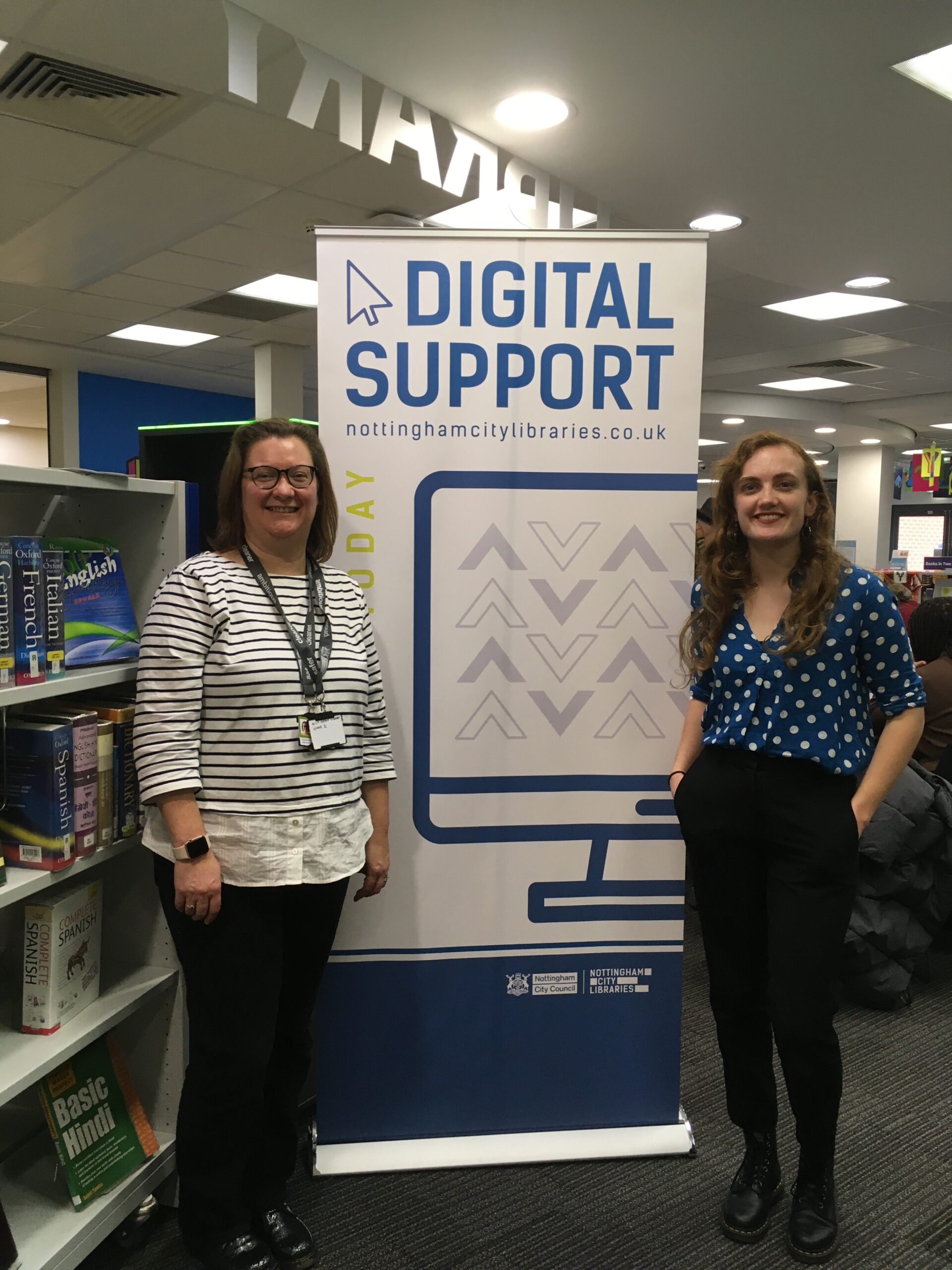
The project will run from November 2025 to March 2026 across four library services – Newcastle, Northumberland, Nottingham City and Nottinghamshire (Inspire) – covering a population of 1.8 million through 121 individual libraries. Target groups include older people, low-income families and individuals with disabilities.
An estimated 8.5m adults in the UK lack the lack the basic digital skills needed for life and work and less than a third (27%) feel confident in recognising AI-generated content online.1
Public libraries are the nation’s leading provider of free internet access and digital skills support. There are around 3,000 individual libraries in England, providing 25,000 free-to-use public PCs and devices – last year these were used for an estimated 14m hours.2 Eight in 10 library services support people with learning basic digital skills3 and over 90% of library authorities say the “warm, safe and quiet” environment is a top reason people use library PCs4. But rapid digital change – including widespread adoption of AI, the spread of online disinformation and growth of immersive tech – means established approaches to digital inclusion need to adapt and evolve.
The project will lead to the creation of a new practical guide for library staff, co-designed and tested with communities, to build digital confidence among those most at risk of exclusion. The guide will have a particular focus on the benefits and risks of AI tools, and media literacy including mis- and disinformation. A national network for sharing ideas and experience among library workers will also be established.
Councillor Corall Jenkins, Executive Member for Neighbourhoods, Waste and Equalities at Nottingham City Council, said:
“It is exciting to see Nottingham City Libraries being chosen as one of the pilot locations at the forefront of this research. As well as positioning libraries nationally as a key resource in tackling digital exclusion, the outcomes will help us to develop our digital learning offer in Nottingham’s libraries to meet the needs of city residents and help more people feel confident online. Residents will benefit from resources to help them use learning tools such as Learn my Way to develop their digital knowledge, as well as a range of activities in the new year engaging different audiences with tools which can make their lives easier and exploring new areas of digital technology such as AI.”
Isobel Hunter MBE, chief executive of Libraries Connected, said:
“We’re thrilled to receive a grant from the Digital Inclusion Access Fund, working with our partners Good Things Foundation and WSA Community Consultants. Around 8 million people in the UK lack basic digital skills. Without targeted action, they will fall further behind as technology – especially AI – moves forward.”
“Libraries already help thousands every day to keep in touch, find jobs, save money and access services online, but the digital world is changing fast. This project will give library staff the tools they need to keep pace – and provide important new evidence for what works in tackling digital exclusion among vulnerable groups.”
Dr Emma Stone, Director of Evidence and Engagement at Good Things Foundation, said:
“AI offers huge opportunities, but many feel unsure, even fearful. The rise in misinformation and disinformation challenges us to evolve how we provide digital inclusion support to people with low skills and confidence. We can test and learn how libraries can use our new free learning tool, the ‘AI Gateway’, to help build people’s AI awareness. With so many libraries in the National Digital Inclusion Network, partnering with Libraries Connected is a fantastic opportunity to innovate, evaluate, and share what we discover with digital inclusion hubs of all kinds across England, and beyond.”
Wendy Sugarman, Director of WSA Community said:
“We are delighted to be supporting libraries to find new ways to bridge the digital divide and introduce people to AI and media literacy. WSA Community will be helping to capture and share the learning so that more library services and local communities can benefit.”
Notes
For media enquiries and interviews please contact James Gray, Communications and Advocacy Manager at Libraries Connected by emailing james.gray@librariesconnected.org.uk or calling 07849085762
Libraries Connected
We are an independent charity that supports, promotes and represents public libraries. Our work is driven and led by our membership, which includes every library service in England, Wales, Northern Ireland and the Crown Dependencies. As well as providing practical support, training and advice to libraries, we represent them to government and raise their profile in the media. We also develop and lead national library projects with a range of cultural, academic and corporate partners. Part of our core funding in England comes from Arts Council England to help embed their Investment Principles across the library network.
Good Things Foundation
Good Things Foundation is the UK’s leading digital inclusion charity. We work to fix the digital divide at a hyperlocal level with our National Digital Inclusion Network – comprised of over 5,000 community partners providing a range of free digital inclusion support, such as:
- The National Databank, providing free mobile connectivity data;
- The National Device Bank, supplying free, refurbished devices to people in need;
- Learn My Way, our free flagship basic digital skills platform, which is widely used in libraries and has supported thousands to get online;
- AI Gateway – a new free, interactive learning platform designed to help demystify AI.
We work in partnership with organisations such as Virgin Media O2, Vodafone, Accenture, and Nominet to deliver at scale, and advocate for digital inclusion to fix the digital divide – for good.
Good Things Foundation believes everyone should have the confidence, skills, support and access to use digital technology, participate in society and benefit from the digital world, with an ambition to partner with 5000 UK communities and to support 1 million people by the end of 2025.
For more information on Good Things Foundation visit www.goodthingsfoundation.org
WSA Community Consultants
WSA Community specialises in community development, meaningful participation and social inclusion. We have a strong ethical approach and values, with an emphasis on being inclusive, respectful and accessible.
In our work, we use a range of frameworks and models to support good practice, and have experience of tools such as participatory appraisal, participative consultation, and planning and evaluation tools.
We work with stakeholders to develop evaluation frameworks using a theory of change approach and undertake external evaluations to feed into learning. At WSA Community we are keen to encourage and support:
- Learning and sharing across projects and initiatives
- Working together to achieve better outcomes for communities
- Listening to, and sharing of, lived experience to have a real impact on change
Library Contacts: Karen Lushey, Senior Library Officer Karen.lushey@nottinghamcity.gov.uk